Exactly one company in America holds the federal license the entire AI power buildout depends on.
Washington has already made its move. Wall Street hasn’t priced it in.
Now its next quarterly announcement, expected November 4, 2026, could change that forever.
The same three-part setup has already made investors hundreds of percent — and in one case, sixty times their money.
Dear Friend,
On July 1, 2026, a contract was signed between the United States Department of Energy and a company most investors have never heard of.
One signature. And the company's entire annual revenue effectively doubled overnight.
What Washington bought with it was the on switch for the first facility of its kind on American soil in seventy years...
One that sits at the dead center of the most expensive construction project in human history.
It barely made a ripple in the financial press.
In thirty years, I've never seen anything quite like the two documents signed that day.
The first is the contract itself.
It green-lights a single American facility to move to full commercial operation.
With no competitor authorized to begin production.
The second is the federal license sitting behind it.
A license exactly one company in America holds.
Together, I believe those two papers quietly name the most important company in America's AI buildout.
And Wall Street hasn't done the math. I'll prove that over the next few minutes.
But the proof can't start with this company.
It has to start with the stocks you already own.
Because this isn't one company's story. It's one law, and it's already moving through your portfolio.
The same law that doubled one company's revenue with a signature is quietly draining some of the most widely owned stocks in America.
So today, I'm going to reveal six names.
Three stocks to sell.
Including one that sits in more American retirement accounts than any stock on Earth.
And three stocks to buy.
What you decide won't just shape the next two years... it could determine whether you spend your golden years clipping coupons or taking cruises.
You see, the next twenty-four months are going to divide American investors into two groups.
The first group will keep buying the AI story everyone can see.
The chatbots, the apps, the software stocks priced as if nothing can ever go wrong.
You've watched this movie before.
In 2000. Again in 2021.
The stocks were perfect. Right up until the morning they weren't.
The second group is much smaller.
They're going to figure out what the largest technology companies on Earth figured out about eighteen months ago.
And that single distinction could set up well-positioned investors for gains upwards of 1,000% in the months to come.
Starting with the 3 sells... and 3 buys... I want to share with you today.
Why You Should Believe a Word I Say
My name is Dylan Jovine.
I'm the founder of Behind the Markets, an independent research firm.

And before I made my name on Wall Street and became one of the youngest broker-dealers in Wall Street history…
I grew up standing in line for food stamps in Queens, New York.
No trust fund. No connections.
No Ivy League diploma.
No big Wall Street firm would hire me. I was too much of an outsider.
So in 1991, I got my break from another Wall Street outsider.
Peter Jaquith, one of the investment bankers famous for saving New York City from bankruptcy in the 1970s.
He took a chance on me when nobody else would.
And nobody was going to out-work me.
I managed accounts. But I fell in love with researching stocks.
Studying a company was like reading a short history book. The town it was in, the people who worked there, the things they made.
I couldn't believe people got paid to do this.
At one point, my trades were so consistently profitable I got accused of insider trading.
The SEC called me in for a meeting.
I didn't take a lawyer. Just my brokerage records and an explanation of how I invest.
After a couple hours, we shook hands and parted ways. I never heard from them again.
In 1996, my clients bankrolled me to start my own firm.
Lexington Capital Partners, a broker-dealer and market maker at 100 Wall Street.
At 24, one of the youngest people in American history to launch one.
Not with big bank money. With my own clients' money.
We made markets in over 100 securities.
In the same arena as Goldman Sachs, State Street, and Cantor Fitzgerald.
More than $1 billion moved through my hands before I turned 30.
You learn things in the market maker's chair that no Bloomberg terminal can teach you.
How money really flows, where it gets stuck, and who owns the gates it has to pass through.
Everything I'll show you today comes from that chair.
And the chair taught me one more thing.
The best research on Wall Street never reaches the people who need it most.
It's built for big institutions, priced for big institutions, and kept away from everyone else.
So in 2004, I walked away from the brokerage world.
I started publishing research for regular investors, with no conflicts and nothing to sell but the work.
At its peak, that first company served more than 500,000 readers in 28 countries.
I sold it in 2011 to the largest independent financial publisher in the world.
Today I run Behind the Markets.
Right now, my record shows 101 closed recommendations.
An average gain of 44% per closed trade.
And 71 winners out of every 100.
Winners like AMD.
On March 19, 2025, I told my readers to buy Advanced Micro Devices at $157.66.
On July 7, 2026, I told them to sell at $517.40.
That's a 228% gain in 16 months.
And AMD is one of the smaller ones.
The numbers are only half of it.
The other half is the calls I made before anyone believed them.
As early as 2006, I started telling my readers the housing market was a house of cards.
That was over a year before Lehman Brothers collapsed and $17 trillion in American household wealth went up in smoke.
More than $100,000 of it for every household in the country.
I was called a pessimist. I was laughed at.
Then the world fell apart.
And in March of 2009, the market was cut in half.
After that crash, every voice in the country was screaming to stay in cash.
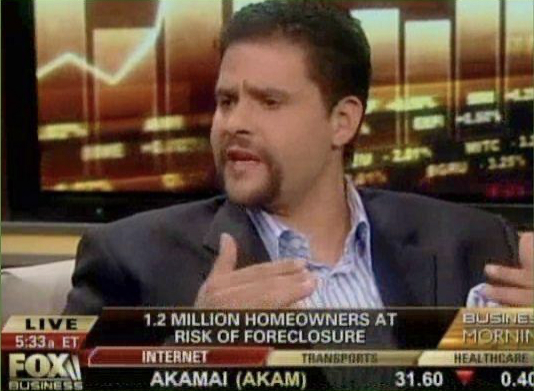
I went on Fox Business and said the opposite.
"The stock market at 6,500 is like walking into your car dealership when everything is on sale, marked 90% off."
AutoNation at $10.
It ran 459%.
American Express at $14.
It ran 646%.
Starbucks at $8.
It ran 700%.
Then in March of 2020, the fastest 30% crash in recorded history was underway.
Goldman Sachs was telling its clients to brace for the S&P at 2,000.
I told my readers to buy again.
Not sell. Buy.
The market bottomed eleven days later.
And my readers had the chance to book gains like …
A 102% gain on PagSeguro Digital.
A 124% gain on DraftKings.
A 155% gain on Floor & Decor.
A 195% gain on Scotts Miracle-Gro.
In July of 2021, I published a warning that Russia and China would drag the world into a new cycle of war.
Seven months later, Russian tanks crossed into Ukraine.
In 2022, I started warning publicly about China.
The Chinese Communist Party sent a woman to "talk to me" about my public statements.
Google and Facebook suspended my accounts.
I didn't flinch. And I haven't stopped.
Which is what brings me to this message today.
Because every time I've seen a situation like the one I'm going to share with you...
The stocks at the ground-floor unleashed history making gains.
I'm talking about roaring 944%... 2,100%... 3,000%... and one that ran past 3,800%.
This message is about what I believe will be the biggest setup I've ever seen.
And why a one-of-a-kind federal license points straight at it.
Let me show you.
The One Idea Tonight Hangs On
Most investors don't understand there are two AI economies.
There's the software layer. The models, the apps, the agents.
And there's the physical layer underneath it. The electricity, the equipment, the metal.
The iron that all of it runs on.
The software layer moves at the speed of a product launch. Weeks.
The physical layer moves at the speed of a factory. Years.
The software layer uses YOUR money – as an investor – to fund the physical layer.
The physical layer receives that money.
WEEKS
YEARS
And that difference in speed is creating the widest gap between price and reality I have seen in my career.
Every name you get today faces the same one-question test I learned in the market maker's chair.
Whether the company pays the toll, or owns the toll booth.
Toll-payers get sold. Toll-owners get bought.
Start with what happened this year.
The four largest technology companies came into 2026 planning to spend more than $650 billion building AI infrastructure.
That's more than any military budget on Earth except the Pentagon's.
Within three months, they'd raised it toward $725 billion.
The revision alone, the extra $75 billion, is three NASA budgets.
And it still won't be enough.
All across America, the buildings are going up... and not one of them is guaranteed the power to turn on.
Bloomberg and the research firm Sightline Climate went out and counted this spring.
Of the 12 to 16 gigawatts of new data center capacity planned in America this year, only about 5 are actually under construction.
And the five gigawatts that are being built don't come with their own grid.
They plug into yours.
Nearly 4 million homes' worth of electricity, siphoned off to feed the machines.
The companies selling that power have already made my readers money.
In November 2024, I recommended an independent power producer standing directly in the path of that demand wave.
Its name is Talen Energy.
Within 11 months, the stock had more than doubled.
And this is just the early innings.
Wood Mackenzie projects U.S. data-center capacity roughly quadrupling between now and 2030, from about 24 gigawatts to 100.
By 2030, American data centers alone are on track to draw more than the entire state of Texas at its all-time peak.
The equipment inside those buildings has already started repricing, too.
In October 2024, I recommended Vertiv, the company that builds the power and cooling systems inside the data centers themselves.
From the date of my recommendation, the stock ultimately went up more than 230%.
And here's the thing – the crisis for their machines hasn't been resolved.
The line has gotten longer.
Everything I just described is the traffic jam at the entrance of a road that gets four times more crowded from here.
And nowhere is that jam more visible, right now, than in Texas.
The Sequence Worth Writing Down
Texas runs its own power grid. It's called ERCOT.
The most power Texas has ever drawn at once is about 85 gigawatts.
Every home, every factory, every air conditioner in the state. The peak hour of the hottest afternoon on record.
That's the all-time high.
Now watch the line of customers asking to connect.
Not long ago, the queue stood at 63 gigawatts.
That's three-quarters of the biggest load in Texas history.
Within a year, the queue hit 226.
More than tripling.
226 gigawatts is nearly three times everything Texas has ever run at once.
By April 2026, it hit 410 gigawatts.
410 gigawatts is nearly five times the most power Texas has ever used at any moment in its history.
It's roughly the output of 400 large nuclear reactors.
America has fewer than 100.
That's close to what the entire United States, all 340 million of us, uses on an average day.
All of it asking to plug into one state of 30 million people.
Roughly 87% of that line is data centers.
And remember the national count from a minute ago?
The whole country's plan for this year is 12 to 16 gigawatts.
What's actually being built is 5.
Texas alone has 410 gigawatts standing outside, asking.
The line in one state is more than twenty-five times the whole country's plan.
And eighty times what's actually being built.
We're talking about inconceivable energy demand that has never been seen before.
Cut the line in half and it still swamps everything the country can deliver.
Everyone is asking. Almost nobody can plug in.
So why can't supply just catch up?
Let me illustrate why with one example.
Take one piece of equipment. The transformer.
The gray box that steps power up and down between the grid and everything that uses it.
There's one hanging on a pole at the end of your street right now.
Nothing connects without it.
Not a data center, not a substation, not a factory.
It is the tollgate of the entire electrical economy.
Before 2020, if you ordered a large substation transformer, you waited around 140 weeks.
Today, Wood Mackenzie puts the wait at more than 160 weeks. And climbing.
That's more than three years.
A child born the day you sign the purchase order is speaking in sentences before the crate arrives.
And for the biggest units, developers are being quoted as long as five years.
Now for the part that should frustrate every red-blooded American seeing this message.
Eight of every ten of those gray boxes comes out of a foreign factory.
The United States imports more than 80% of its large power transformers.
Because over forty years, we let the domestic industry go.
We signed trade deal after trade deal that sent the factories overseas — until, in May of 2020, a presidential emergency order admitted in writing that America's grid had become dangerously dependent on foreign-made equipment.
So follow the chain.
$725 billion of committed capital... needs gigawatts stuck in a 410-gigawatt queue... behind equipment with lead times of 3 to 5 years... that we mostly don't make here anymore.
You can print money. In time, you can even print chips.
You cannot print a transformer.
Your software layer – your innovation – will always be at the mercy of the physical layer.
That's the Iron Law.
Technology can only move at the speed of its infrastructure.
When the machinery underneath stalls, the technology stalls with it.
And the race quietly changes. It stops rewarding whoever invents best, and starts rewarding whoever owns the machinery.
In a moment, I'm going to show you three of the stocks which are about to lose their tailwinds as the Iron Law reshuffles the tech world.
But first...
You should understand that this law has minted fortunes before.
Think back to 2021.
America reopened after COVID, and everyone ordered everything at once.
The couches, the appliances, the exercise bikes.
Almost all of it made overseas.
And all of it had to cross an ocean in a steel box on a ship.
Suddenly, there weren't enough ships.
Dozens of loaded vessels anchored off Long Beach, waiting weeks just to unload.
Store shelves sat empty while billions of dollars of cargo floated offshore.
And nobody could fix it. Because you cannot print a container ship.
A new one takes years to build. Just like a transformer.
So the price of moving one of those boxes from Shanghai to Los Angeles went from about $2,000... to as much as $20,000.
Ten times the price. Same box, same ocean.
The only thing that changed was the line to get one.
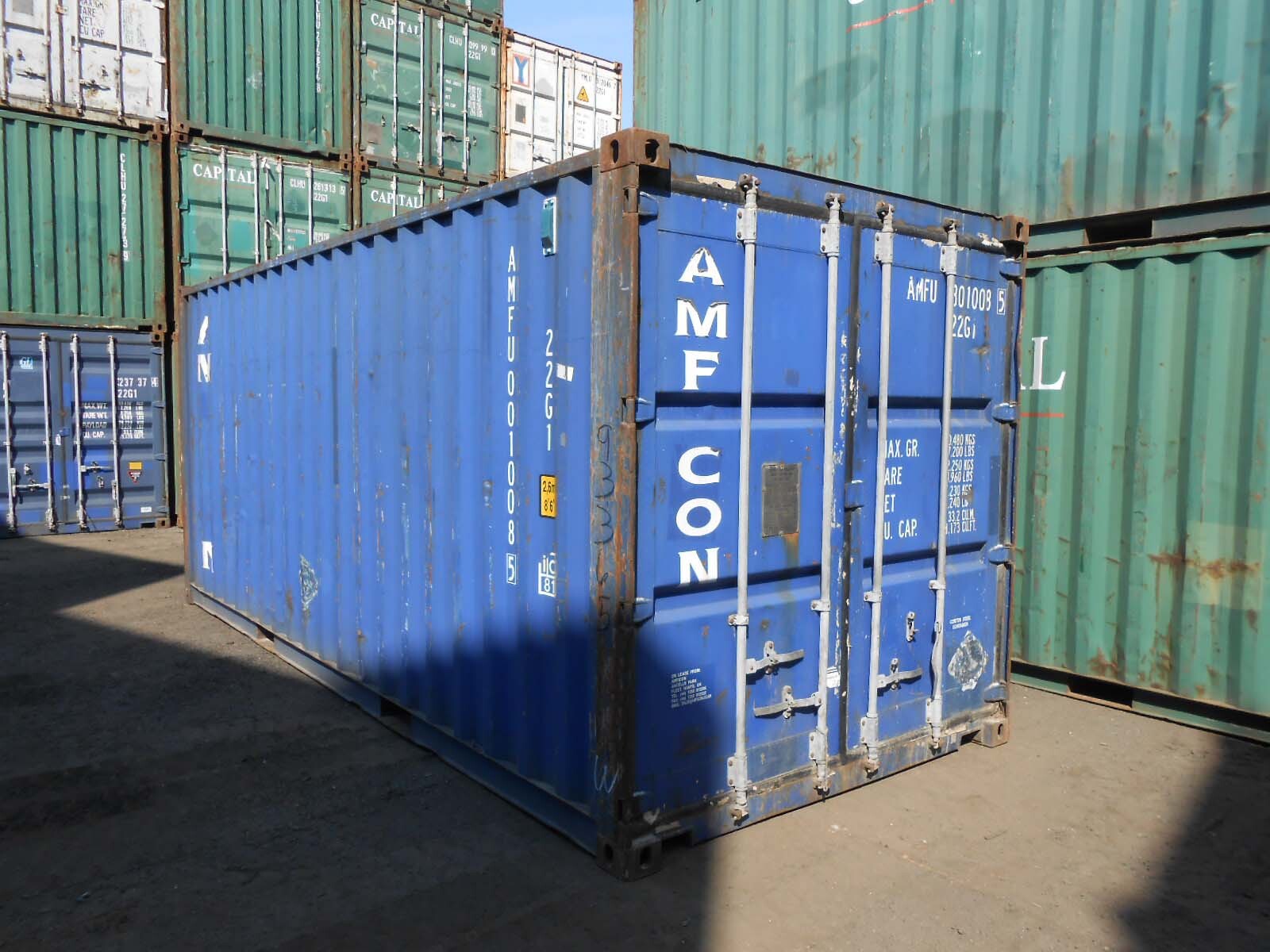
One company, Danaos, owned those ships.
Its stock rose more than 2,200% in about 15 months.
Enough to turn $10,000 into $230,000 in just a little over a year.
Not on an invention. On a bottleneck.
Every dollar of the AI boom is now subject to the same Iron Law.
And I believe it has set the stage for a stock that could eclipse that 2,200% gain.
Because Danaos had nothing compared to what this firm signed with the Federal Government on July 1st.
And I'm not the only one who is seeing the Iron Law play out.
The most famous technologist alive spent the past two years publicly warning that the shortages would arrive in exactly this order.
First the chips, then the transformers, then the electricity itself.
The head of the world's best-known AI lab has said flatly that the future of this technology comes down to energy.
The federal grid-reliability watchdog has published escalating warnings about demand growth for two straight years.
The people building this future already know where the wall is.
The stock market is the last to find out. And that lag is the only reason you and I have a window today.
The Great Lockup Nobody Voted On
Now for the part of this story nobody in Washington or Silicon Valley says plainly.
The biggest buyers already know all of this. Look at what they're doing about it.
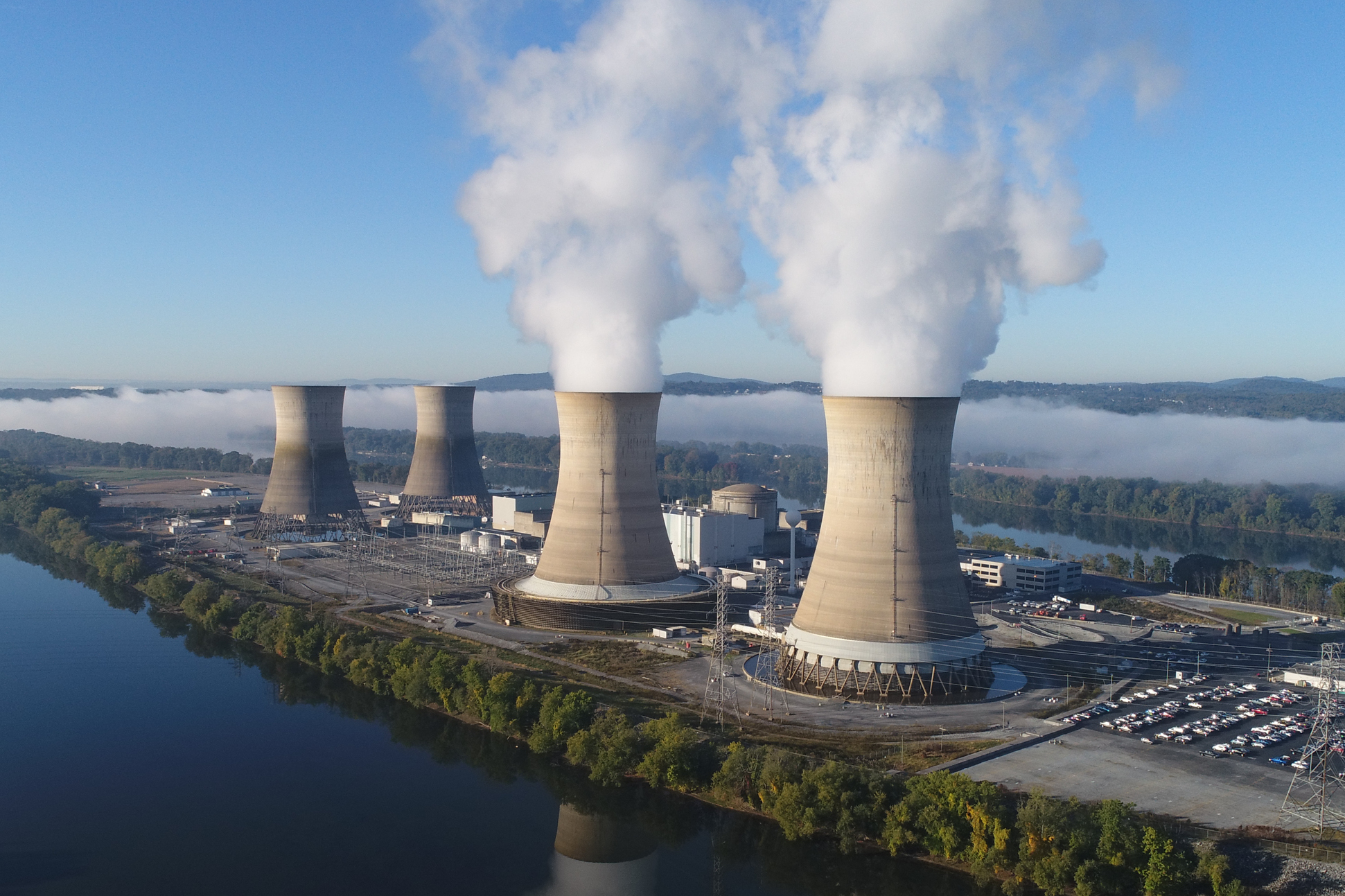
Microsoft signed a 20-year deal to switch a shut-down nuclear reactor back on to feed data centers.
At Three Mile Island.
Think about what that tells you.
They will restart the most infamous power plant in American history before they'll wait in line for the grid.
And the line itself?
Trade reports in 2026 describe tech giants outbidding local utilities for transformer slots.
Paying to cut the line.
Which means somewhere in America tonight, a town utility is waiting years to replace the gray box that keeps its streetlights on...
Because a trillion-dollar company bought its place in line.
That could be your town.
That's the lockup.
It's happening in plain sight. That's what makes it a lockup and not a conspiracy.
They're allowed to do it. They're doing it.
And I'm not reading about any of this from the outside.
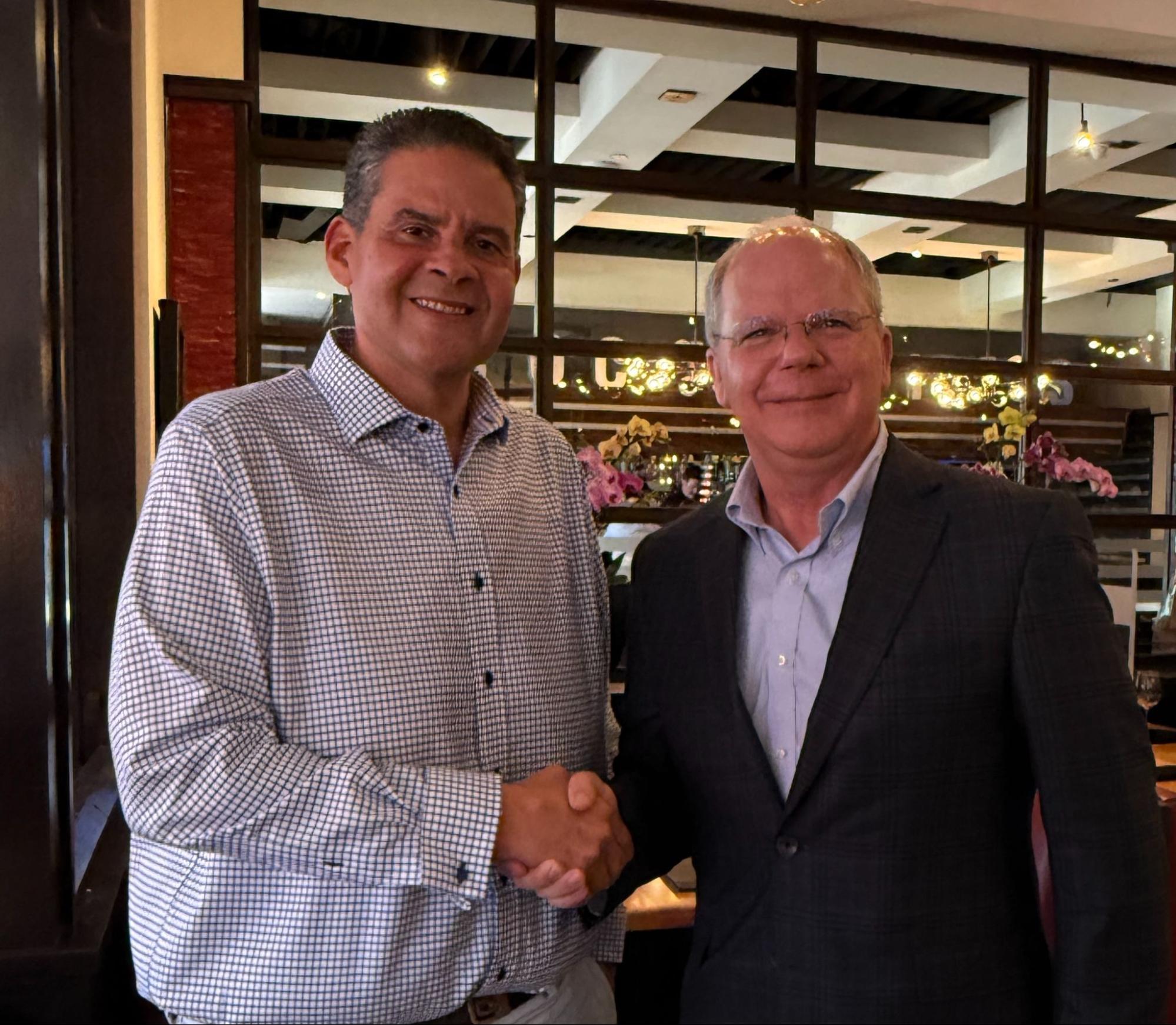
I've sat down with Congressman Brett Guthrie, chairman of the House Energy and Commerce Committee.
That's the oldest standing committee in Congress. And the one that writes the rules for how energy is managed in this country.
I've met with Congressman Bill Huizenga, who sits on the subcommittee overseeing artificial intelligence.
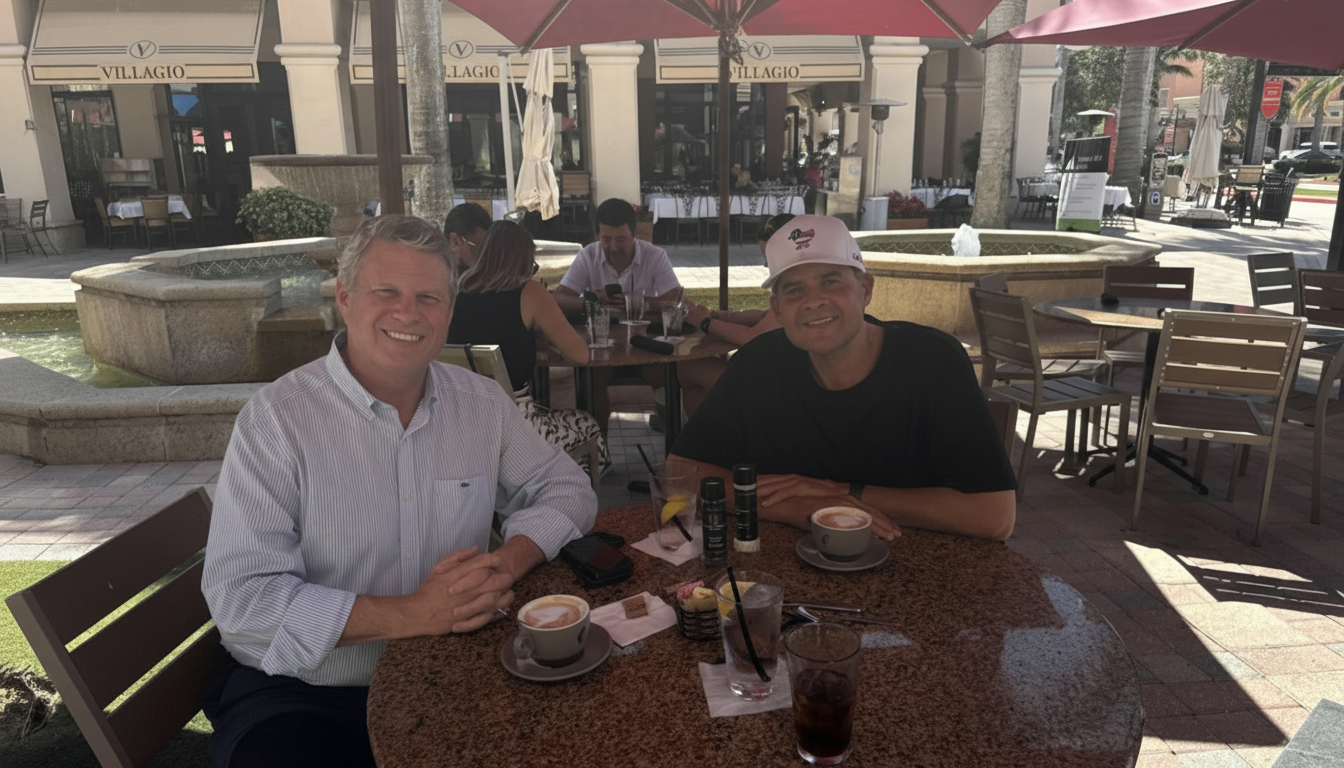
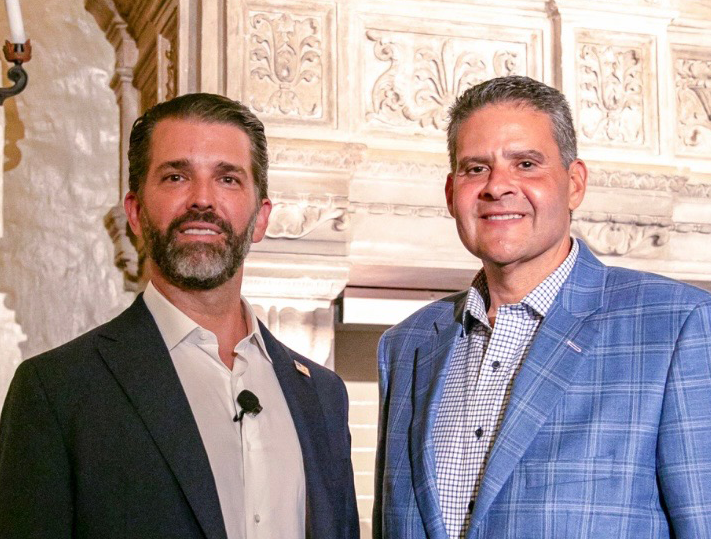
And late last year, I was invited to The Breakers in Palm Beach.
No press. No cameras.
A small group of investors, and Donald Trump Jr.
I've sat across the table from the people shaping this policy.
You don't walk out of conversations like those thinking the power problem is a few years off.
You walk out understanding it's already here.
And that Washington has started choosing which companies get to solve it.
So let's get you on the right side of it...
Starting with one of the stocks the Iron Law is about to crush.
GIFT #1 — SELL: The Stock I Loved
Palantir.
And understand why this one has to lead the sell list.
At its peak, Palantir was one of the 20 most valuable companies in America.
Bigger than Cisco. Bigger than IBM.
It spent most of last year as the single best-performing stock in the entire S&P 500.
It also sits inside the Nasdaq-100.
Which means if you own an index fund — in your 401(k), your IRA, anywhere — you almost certainly own Palantir right now, whether you ever chose it or not.
And its individual shareholder base is one of the biggest and most loyal in the market.
Wall Street calls it a cult following. I call it millions of regular investors sitting on gains they love.
That's exactly why nobody will tell them to sell.
I used to be one of them.
I recommended Palantir to my readers at $7 a share, back when Wall Street had left it for dead.
From that price, the stock went on to run more than 2,700%.
I believed in the company then, and I'll say kind things about it now. Real technology, real government moats, real execution.
So understand what it means when I say this next part.
At its recent peaks, the market valued Palantir at about 100 times all the money it collects in a year.
Let me do that math for you.
Buy the whole company at that price, and even if it handed you every dollar it takes in — before paying a single employee or a single bill — you'd wait about 100 years to get your money back.
And that's counting sales, not profits.
Profits are a fraction of sales. So the real wait is even longer.
Nobody is paying that price for the business Palantir runs today.
They're paying for a perfect future. And the future just got competition.
Here's my real problem with the stock.
Palantir sells AI software. And AI software is the one product on Earth getting cheaper every single year.
Every new generation of AI models lets competitors copy more of what Palantir does, for less money.
Worse, Palantir's biggest customers are the same tech giants spending $725 billion to need it less.
And while all of that happens, Palantir owns none of the machinery this boom actually runs on.
Not a watt of the power. Not an inch of the wire.
Not a pound of the metal.
It rents all of it. At whatever price the owners set.
The Iron Law says Palantir's costs are now set by people who aren't Palantir.
Great company. Wrong side of the tollgate.
Be grateful for the run. And be gone.
GIFT #2 — BUY: The Same Price My Readers Paid
Now the first free buy.
And let me explain why it's free. Because in this business, free deserves suspicion.
On July 13, 2026, days before this went out, I recommended Baker Hughes to my paying subscribers.
Most Americans stopped thinking about this company decades ago.
It's an old oilfield-services name with roots going back more than a century.
Which is exactly why almost nobody has noticed what it turned into.
You've already seen the new business in action, even if nobody framed it for you.
One of the most famous AI labs in America needed more electricity than its host city could hand over.
So it bought its own fleet of gas turbines and stood up a power plant behind its own fence.
The grid didn't power that AI. Gas machines behind a fence did.
Here's the argument in one sentence.
When a tech giant can't wait five years for a grid connection, it builds its own power.
And the machines it builds with come from a short list of suppliers whose order books already stretch toward 2030.
Baker Hughes is on that list.
So understand what that position is worth.
This buildout is already running at $725 billion a year. And the capacity it's chasing is projected to quadruple from here.
Run that for even five years and you're past three trillion dollars.
Behind that money stands a 410-gigawatt line of projects that can't get grid power, buyers desperate enough to build private power plants, and a federal government scrambling to decide who gets to solve it.
Baker Hughes doesn't pay one dollar into any of that.
It sells the machinery every desperate buyer in that line has to order — and books a sliver of profit on every single unit, year after year, out to 2030.
This is what the construction side of the Iron Law looks like.
It's what the stocks that are set to soar 1,000%... 2,000%... even upwards of 3,800% look like.
So why is it free? Three reasons.
Because it's a giant, liquid, well-covered company. 100,000 readers buying it tomorrow can't move it.
Because my paying subscribers just got it, at just about the same price you can get it today.
Nobody's being front-run. Nobody's holding your exit.
And because I'd rather prove how this research works with a real recommendation you can act on today.
One famous Wall Street operation spent the summer of 2026 giving away picks it had already ridden for years.
I'm giving you the one my readers just got.
That's the difference between showing you a trophy and handing you a ticket.
The buildout behind this company is four times the size of the one that sent my Talen Energy recommendation up more than double in under a year.
So again...
Baker Hughes. Ticker BKR.
Yours free. Write it down.
But before I show you the next company to sell... and the next company to buy... let me give you an example of what a pattern like this – a situation driven by the Iron Law – can do to one little-known stock.
What the Next One Could Be Worth
First, IonQ.
I recommended it in May 2024, at $8.11.
The crowd said quantum computing was a decade away. A science project.
What the crowd missed was who already owned the hardware.
While the experts argued about timelines, IonQ had working quantum machines you could rent time on that day. One of the only companies on Earth that could say that.
The Iron Law again. The race pays whoever owns the machinery.
And Washington has since declared quantum computing a national priority, by executive order.
Only a handful of companies on Earth have working machines. And hardware scarcity gets priced long before products do.
It rocketed 944% in 17 months.
$5,000 became $52,200.
Next – Micron.
The chip wars had turned memory chips into a matter of national security.
And here's what most investors never learned. Every AI chip on Earth is useless without high-bandwidth memory stacked right beside it.
Three companies on the planet can make that memory at scale. Micron is the only American one.
When the buildout hit, the line formed at Micron's door. The Iron Law, paying the machinery owner.
Up more than 2,100% in under 4 years.
Every $5,000 could have come back as $110,000.
Next is Axon.
I recommended it at $28, years before Wall Street understood what it was.
Axon makes the Taser. And the body cameras on America's police officers.
And the evidence system every one of those cameras feeds.
Here's the lock. Once a department's evidence lives inside Axon's system, switching means risking the evidence itself.
Not a gadget company. The only real supplier to customers with nowhere else to go.
The machinery owned the customer. The Iron Law, again.
Up more than 3,000% over the 7 years that followed.
And the top slot goes to Rocket Lab at $3.80.
Not because rockets are exciting. Because getting to orbit was the hard part.
Thousands of satellites need a ride to orbit. Weather, defense, communications, all of it.
And outside of SpaceX, almost nobody on Earth can reliably provide that ride. Rocket Lab can.
The innovators build the satellites. Rocket Lab owns the road to space.
Up more than 3,800% in just over 2 years.
Every $5,000 ran as high as $195,000.
944... 2,100... 3,000... 3,800-plus.
The purer the monopoly, the bigger the number.
The more desperate the innovators... the more critical the technology.
And the same pattern has paid off across the board.
Every number below is measured from the date of my recommendation.
AeroVironment, 120%.
Eli Lilly, 148%.
C3.ai, more than 160% in 5 months.
Viking Therapeutics, more than 430% in under 10 months.
Meta, 680%, bought with my own money during the darkest days of the 2022 crash.
Palantir, more than 2,400% from that $7 entry.
Before our time is done today, I'm going to show you the one situation I think beats everything I've discussed – involving a company with a one-of-a-kind contract with the Federal Government.
I can't say it enough – in 30 years of being an investor, at the highest levels of finance, I've never seen anything like this situation before.
But, I want to share one more company before we move into the next buys and sells.
And this one matters most, because of where we're headed.
In 2018 I recommended Intelsat.
Here's what almost nobody understands about the satellite business. A satellite can't just park anywhere.
Every one needs an assigned spot in the sky — an orbital slot — and a government license to broadcast from it.
The slots are finite. The licenses are issued one at a time.
And Intelsat held some of the most valuable slots over the Americas.
You cannot compete with the holder unless the government issues you a slot too. And it won't.
That was a gate with a federal signature on it.
Four months later it ran 339%.
Still the fastest big win I've ever published.
And from the date of my recommendation, the stock ultimately went up more than 450%.
Remember that phrase. A gate with a federal signature on it.
And none of this is a costume I put on for the AI era.
Go back through my record.
Coal producers CONSOL and Peabody.
Banked 65.3% and 41.9%.
A natural-gas utility, 52%.
Rare earths, 77%.
A radiation-detection maker for the nuclear age, 100.6%.
A whole suite of gold positions closed in 2025 between 78% and 133%.
For the better part of a decade, while this industry sold apps, my readers were buying iron, rock, fuel, and metal. And banking it.
Today isn't a pivot.
It's the next stage in the biggest capital wave of our generation.
So let me show you the next company that's about to drown in it... and the one that's going to ride the crest of the wave.
GIFT #3 — SELL: The Hardware Trap
Super Micro.
Now, you're probably thinking...
"The server maker? At the center of the buildout?
The company that assembles the exact machines this entire boom runs on?"
Yes. That one.
And that word, assemble, is the whole story.
In 2023, Super Micro was the best-performing stock in the entire S&P 500.
Up 246% in a single year.
Just like Palantir after it, the crowd fell in love.
And index funds carried it into millions of accounts.
Here's the distinction that will protect you for the rest of this cycle.
Being near the boom is not the same as being a vital part of it.
The question is never "does this company touch AI?"
The question is, can the money route around them?
Run Super Micro through that test.
Its chips come from suppliers who hold all the pricing power.
Its customers are giants who can, and do, order the same racks from Dell, from HP, from a growing list of contract manufacturers.
Squeezed from above by the true chokepoints. Squeezed from below by buyers with alternatives.
That's not a tollgate. That's a toll-payer wearing a hardware costume.
Now the number that pulls the curtain back.
As I was preparing this message, Super Micro announced its best quarter ever.
More than $60 billion in new orders.
The stock jumped 20% in a day.
Buried in that same announcement: even in that perfect quarter, the company expects to keep 15 to 17 cents of every dollar it sells. Before its own bills.
Nvidia, whose chips sit inside those racks, keeps about 75.
One quarter earlier, Super Micro's keep was about 6 cents.
The scarcity right now is so extreme that even the middlemen get to mark up for a season.
That's the entire miracle.
When the line shortens, the 6 cent profit margin comes back.
And the market keeps pricing it like a monopoly anyway.
My favorite detail from this company's recent history.
In 2024, its own auditor resigned mid-engagement. Walked off the job.
And the company had to sprint through a filing scramble to keep its listing in good standing.
To be fair, it caught up, and credit where due.
But sit with the picture.
Does a true tollgate ever have to sprint to convince anyone of anything?
The Iron Law crushes whoever stands between the inventors and the machinery.
When a business is easily bypassed yet commands an unsustainable valuation, the choice is clear: you sell.
That comprises the entire methodology.
Evaluate the bypass potential of every asset in your portfolio before the week concludes.
It costs nothing. And it's worth more than most newsletters.
GIFT #4 — BUY: The Toll Road Already Paying My Readers
Most investors have no idea what just happened to the internet this summer.
On June 3, 2026 — seven weeks ago — the CEO of one company announced that, for the first time in the internet's history, machines now generate more web traffic than human beings.
Not a prediction. A measurement.
Roughly 57% of the traffic to ordinary webpages is now bots and AI agents.
Humans are officially the minority on their own internet.
And the machine share is exploding. Traffic from AI agents — machines that browse, compare, and buy on behalf of people — grew nearly 8,000% last year.
A human checks five websites before making a purchase. An AI agent checks five thousand.
Every one of those visits has to be routed, checked, and secured. Unmanaged, that flood crushes websites — slows them to a crawl, knocks them offline, buries the real customers.
One company solved that problem. By becoming the routing system of the internet itself.
Its name is Cloudflare. Ticker NET.
I recommended it to my readers on May 11th of this year, at $193.98.
As of this writing it's up more than 60%. And it is still rated a buy in our portfolio today.
And here's the part almost nobody connects. The company that announced the machine takeover measured it on its own network.
Because the traffic already runs through its machines.
Here's the setup.
Something like one in five websites on Earth runs behind this one company.
Security, routing, delivery.
You used it today without knowing it.
More and more of that machine traffic has to prove who it is, get checked, and get counted. At the checkpoint this company runs.
And the network standing in the middle of those calls gets to charge for order in the chaos.
They can't route around it. This company is the routing.
And here's my forward view. Same rules as everything else you've seen today.
Now set that against the ladder.
IonQ was the little-known pioneer of quantum hardware.
It ran 944%.
Rocket Lab could put satellites in orbit when almost nobody else outside SpaceX could.
It ran past 3,800%.
This is the toll road for the traffic itself, in the decade when the traffic stops being human.
I'm not promising you those numbers.
I'm telling you what happens when a company owns a road the money has to take.
If the machine-traffic idea is even half right, today's price will one day read like the on-ramp, not the destination.
And before you object that I've spent tonight calling the software layer dead money — understand what this company actually owns.
Its own machines, in its own racks, in more than 300 cities on Earth.

This isn't software riding the network. It owns the network.
The Iron Law protects fifteen years of construction here. You cannot print this company's position, either.
Which brings me to the next big sell...
And I suspect this is going to upset a few people.
GIFT #5 — SELL: The Most Beloved Stock in America
This company sits in more American retirement accounts than any other stock on Earth.
Apple.
First, the respect it's owed.
Apple may be the finest consumer-products company in the history of commerce.
Nothing I'm about to say argues otherwise.
This is not a story about a bad company.
It's a story about a great company standing on the wrong side of every chokepoint that will define the next decade.
And I know exactly what I'm asking. The last time I told my readers to walk away from a stock this loved was November 5th of last year.
Netflix. I'd recommended it that spring, concluded I'd gotten it wrong, and said so.
We walked out flat. Down 1.4%, a nothing trade.
If you held on past my exit, you watched roughly 30% of your money disappear — while Wall Street's best and brightest took another seven months to say the word sell.
It trades under $70 as of this writing. It still hasn't recovered.
Sell calls don't make headlines. They save fortunes.
Here's why Apple will not be the kingmaker of the coming era.
The new AI economy needs power plants. Apple isn't building them.
It needs data-center capacity at a scale that bends power grids.
And among the technology giants, Apple spends the least on all of it. Dead last.
For years the bulls called that discipline.
Here's what it actually was. A decision to rent the future instead of owning it.
And this year, the rent came due in public.
Apple now pays a direct rival for the intelligence behind its own assistant. The reported price: roughly a billion dollars a year, flowing from Apple to a company its ads used to mock.
That's the Iron Law, billing the biggest company on Earth.
Try this tonight. If you have an iPhone, ask a question.
Apple pays a direct rival for the intelligence behind the answer that comes back.
The most valuable product company on Earth... buying the brains of its flagship product from a competitor... the way a landlord wakes up one morning and discovers he's a tenant.
And the scale of the surrender is written in the filings.
The filings put numbers on it. Microsoft, Google, and Amazon each plan roughly $150 billion to more than $200 billion of capital spending this year — most of it AI machinery.
Apple's entire capital budget is less than a tenth of any one of them.
Now, I am not predicting a collapse.
Apple will sell hundreds of millions of phones next year and mint money doing it.
What I'm predicting is a decade of toll-paying priced as if it were a decade of toll-collecting.
And the market still prices Apple like an owner.
So you'd be paying an owner's price for a renter's future.
Hold Apple flat for five years while the machinery owners keep doubling — and you didn't break even.
You paid the difference.
That's dead money.
And dead money is a loss you can't see. Which makes it the most dangerous kind.
Sell Apple.
Three sells. Palantir, Super Micro, Apple.
Two buys. Baker Hughes and Cloudflare.
Five free gifts, delivered.
Which brings us to the sixth. The last buy.
The one that pairs against Apple. The ultimate toll-payer matched against what I believe is the ultimate certified monopoly.
And the one I can't name for free.
It comes down to three things.
What this company is... what a one-of-a-kind federal license says about it... and what happens to a stock this size if even a fraction of my readers pile in before the market re-rates it.
Which brings me to something really important… something most investors don’t know, and will never know.
The Government Keeps a Registry of Certified Monopolies. Nobody Reads It.
Start with the paper.
Because the paper is why this became my number-one recommendation.
Here's something almost no investor knows.
Every time the federal government decides that only one company on Earth can do a job, it has to say so in writing.
Not in a memo. Not behind a closed door.
In a document with a title, a signature, and a public file number.
Here's how that happens.
By law, the government must put its contracts out for open bidding.
That isn't a guideline. It's statute.
But there is one exception. And it's the one that matters here.
Under a single statute, the government can skip the bidding entirely and hand the whole contract to one company.
No auction. No rival bids.
Every other company in America is locked out of that work, by law.
That statute is numbered FAR 6.302-1. And the government is permitted to use it for exactly one reason — a reason printed right in the regulation's own title:
"Only one responsible source and no other supplies or services will satisfy agency requirements."
In plain English, invoking that statute means one thing:
Nobody else can do the work. So the door closes on every competitor in the country.
And a contracting officer can't simply assert it.
So picture the man at that desk. He needs a part, and he knows of exactly one company on Earth that makes it.
Before he's allowed to skip the bidding, he has to publish a public notice — asking whether any company in America can supply it.
Then he has to wait. And consider every answer that comes back.
And when nobody raises a hand, he still isn't finished.
He has to write, sign, and file a document titled: "Justification and Approval for Other Than Full and Open Competition."
That is the United States government's phrase for a monopoly.
Then the award gets stamped in the federal contract database with a three-letter code.
UNQ.
Unique Source.
Three letters that mean: we asked the entire country, and exactly one company answered.
That code is sitting in a public database tonight, on award after award.
So is the justification behind it. The law requires the government to make it available to anyone who wants to read it.
I'm not describing a theory.
I'm describing a filing cabinet.
And a contract is the smallest version of that paper.
A contract covers one job. One order, one part.
Sometimes the paper covers the whole business.
A federal license. A permit exactly one company in the country holds — not for one order, but for the work itself.
The FCC's spectrum and orbital-slot filings. The NRC's reactor and fuel-facility licenses.
Same signature. Same meaning.
We looked. There is no one else.
Remember Intelsat?
Federal signature. Exclusive license.
And with orbital slots, Congress went further than it ever went with contracts.
Under Section 647 of the ORBIT Act, the FCC is barred from auctioning the orbital slots used for global satellite service.
Not rarely. Not with exceptions.
There is no auction at all.
The government simply grants the slot. One company, one location, one license.
Which is why, when a European rival applied to the FCC for a slot Intelsat had already claimed, the government turned it down.
Which is why, four months after I recommended it, the stock roared 339%.
Wall Street doesn't read any of this.
Wall Street reads earnings — and earnings are the past. They tell you what a company already did.
These papers tell you something earnings never will.
They tell you who cannot be replaced.
A list of companies the money can't go around.
I've read those files for years. It's the best monopoly-finder I know.
And the entry at the center of this message is the most absolute one I have ever found.
The License
"One company holds the only federal license of its kind for the fuel a new generation of American reactors is being built to run on.
Let me make this plain.
Washington has ordered the biggest nuclear buildout in American history. The executive orders signed last year call for quadrupling the country's nuclear fleet — from about 97 gigawatts today to 400 by 2050.
Ten new large reactors are ordered under construction by 2030.
Restarts are underway at plants your parents watched on the news. And the tech giants are buying small, factory-built reactors the way they used to buy office parks.
Nothing like it has been attempted since the interstate highway system in 1956. Or the electrification of rural America in 1936.
And an entire class of those new reactors — the small, advanced ones at the center of the plan — runs on one special fuel.
One company. One facility.
One federal license to produce it commercially on American soil.
It is the single biggest monopoly I have ever seen.
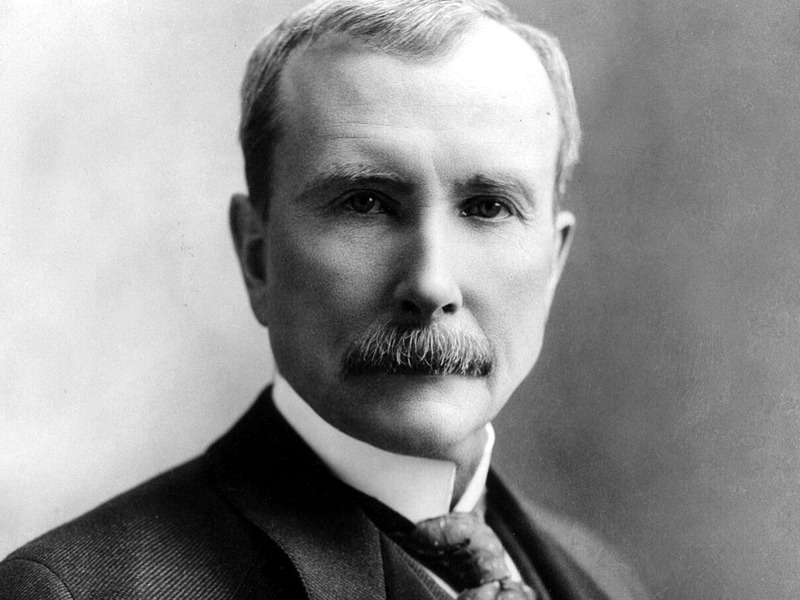
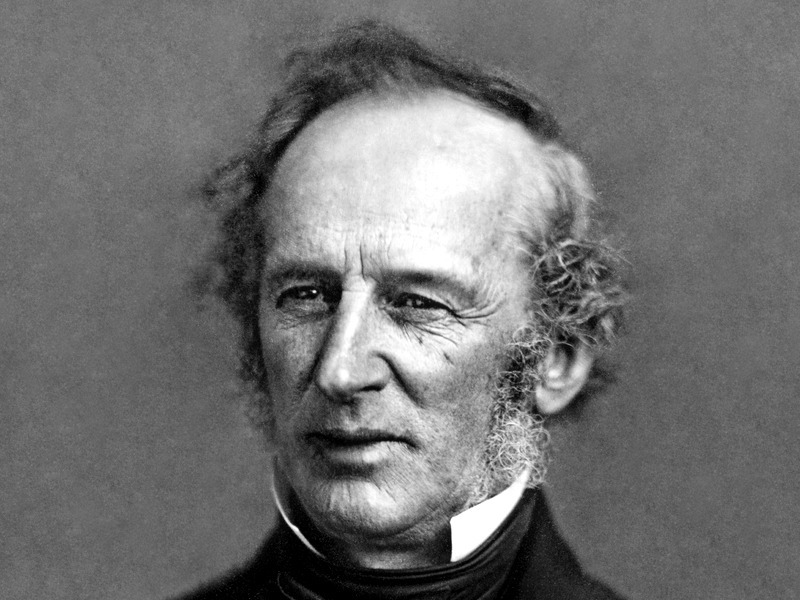
Bigger than Rockefeller's grip on oil. Bigger than Vanderbilt's railroads, and Carnegie's steel.
Because their monopolies were built on muscle. This one is written into federal law.
And ground-floor investors are looking at what I believe could be some of the biggest homeruns of this era.
The small, factory-built reactors the tech giants are lining up to buy.
Without this fuel, those reactors being built are just columns of steel.
Warehouses.
Now you understand why I opened with that contract.
On July 1, 2026, the Department of Energy signed a deal that doubled this company's revenue overnight.
It green-lit the first plant of its kind in seventy years to go fully commercial.
That is not a science project.
That is Washington switching on the only source it has left.
The government isn't debating whether this monopoly matters. It's paying for it.
Now connect it to everything you've seen today.
The AI buildout needs power on a scale the grid cannot deliver.
You've seen the 410-gigawatt queue, the 160-week lead times.
So the hyperscalers went around the grid.
Remember what I showed you earlier. Microsoft signing a 20-year deal to resurrect the most infamous nuclear plant in American history rather than wait in line.
That wasn't an oddity. That was the starting gun.
Restarts, life extensions, and a pipeline of those small next-generation reactors. That's the road the biggest capital on Earth has chosen.
And nearly every serious reactor on that new road runs on the fuel this one license covers.
Here's the history that turns this into a vise.
For decades, America's reactors ran on enriched fuel from an unlikely supplier. Russia.
It began as a swords-to-plowshares deal after the Cold War. It quietly became a dependence.
By the 2020s, roughly one pound in four of the enriched fuel in American reactors traced back to Russia.
Then Russia invaded Ukraine.
And in 2024, Congress did something it almost never does. It banned the imports outright — and wrote the phase-out schedule directly into federal law.
For decades, we shipped this industry overseas the way we shipped everything else overseas.
About a quarter of the fuel in American reactors came from one foreign supplier. Russia.
Then, in May 2024, Congress banned it.
Not a tariff. A ban.
There are waivers, and there are quotas.
Here's what Congress actually wrote into the law. Four numbers, one for each year.
For 2024, 476,536 kilograms.
That's roughly what it takes to keep a quarter of America's reactors running for a year.
For 2025, 470,376.
For 2026, 464,183.
For 2027, 459,083.
And then the list stops.
There is no number for 2028.
Congress didn't forget to write one.
The number for 2028 is zero.
The waivers terminate, by statute, on January 1, 2028.
Read that list again.
It is a countdown, printed in federal law, to the day a quarter of America's reactor fuel supply becomes illegal.
Read that the way an investor reads it.
Congress wrote into law the date the main foreign supply goes to zero.
The AI buildout is driving demand straight up.
And one American company holds the only license to make the new fuel here at home.
Every road out runs through more of this fuel.
Restart the old fleet, build the new fleet, stockpile for security.
And every licensed American pound of it runs through one company.
This is the Iron Law with a federal signature on it.
Every Gate on This Road Has Been Repriced — Except One
Which brings us to the question everything else has been building toward.
The one that decides whether the story is real.
If one company holds the only license, with a statutory countdown behind it, under a demand wave like this... then Wall Street must have bid it to the moon already.
Because that's how this always ends.
And that's exactly how it's ended everywhere else on this road.
Watch what the market did the moment it noticed each toll booth.
The premier gas-plant builder in America now trades at roughly double what the average analyst says it's worth.
The leading North American transformer maker is up about 200% in a year.
The data-center power-equipment names have doubled and tripled.
Even the electricity producers.
Every gate has been repriced.
Every one, except the most absolute monopoly of all.
The fuel itself. The one with the only license.
That one, Wall Street hasn't even begun to price.
How is that possible?
Because of the single most beautiful fact in this entire story. Ready?
Wall Street still has this company filed under yesterday's story.
For years, this company made its living in the old nuclear-fuel world.
The global supply chain everybody knew.
That's the story the analysts modeled. That's the folder the stock still sits in.
But the license belongs to tomorrow's story. The one Washington just wrote into law.
And Wall Street's filing system has one rule.
A stock only gets re-filed when the new story shows up in the quarterly numbers.
Until then, the license rides along unpriced.
The only license in America. For the fuel the entire next-generation fleet requires.
With the foreign competition banned by federal statute.
Call it what it is. A filing error by the entire market.
In this business, that almost never happens.
Windows close. This one is still open.
And Congress has already scheduled the day the whole market finds out why.
Three Fortunes, One Pattern
Filing errors of this exact kind have a track record.
The market has corrected three of them in modern memory. And each correction minted fortunes for the people who saw it early.
Let me show you all three. Then you tell me if this sounds familiar.
You watched this one on the news.
For ten years, General Electric was the most disappointing big stock in America.
So hated that analysts refused to value it as one company. They carved it into imaginary parts on their spreadsheets, because they didn't believe the whole was worth owning.
Then in 2024 it broke apart for real. General Electric split itself into three separate companies.
And the market found a power-and-grid business inside the wreck that nobody had bothered to price.
From the day GE Vernova stood on its own, it became one of the great re-ratings of the decade.
Hundreds of percent for anyone who held it through the split.
And my readers didn't just watch.
From the date of my recommendation, GE Vernova ultimately went up more than 275%.
When a good asset hides inside a hated wrapper, the market pays whoever finds it first.
Here's another one.
In 2010, China cut off exports of rare-earth metals.
Overnight, the world learned that the supply of these metals had quietly collapsed into one country's hands.
The last producer outside China was an Australian company called Lynas.
For years, China mined and refined nearly all of the world's rare earths. The metals inside every missile, every fighter jet, every EV motor.
The West had exactly one serious producer outside China's grip. An Australian company called Lynas.
Then Beijing started using rare earths as a weapon.
Export curbs. Embargo threats.
And Lynas was repriced the instant Western governments started saying "sole supplier" out loud.
Worth several times more in a matter of months.
When those metals panicked again a decade later, my readers were standing there.
From my first recommendation to buy Lynas, the stock's price ultimately rose 173% over the next few years.
And here's the lesson. The day a government names a monopoly out loud, the clock starts.
This time the government didn't just name it. It wrote the deadline into law.
Here's another, dramatic example.
There's a company called TransDigm.
Its whole business model fits in one sentence, and it tells shareholders so.
Buy up aircraft parts where it is the only approved source, then price them accordingly.
Planes fly for decades. Parts wear out.
And when yours is the only approved part, the airline pays your price or the plane doesn't fly.
That's it. That's the company.
A collection of no-competitor papers.
Since it went public in 2006, it has multiplied its investors' money roughly sixty times over.
Sixty times.
Not on a product. Not on a story.
On the same kind of federal paper I showed you five minutes ago. Collected like stamps for twenty years.
Now stack the three side by side.
A hidden asset inside a hated wrapper. Hundreds of percent when the market found it.
A monopoly on critical supply. Repriced in months, the day a government said it out loud.
A business built on nothing but no-competitor paper. Sixty times investors' money.
This company is all three at once.
A hidden asset. The license, buried under an old business nobody wants.
A critical supply. The foreign version banned by law, on a clock.
And a no-competitor paper. The only license of its kind in America.
Three patterns the market has already paid for, separately.
Stacked inside one stock.
But look at what history has paid for this exact setup.
It's why I call my own numbers conservative.
The Last Time I Found "The Only Company on Earth"
And it's not only market history.
I've seen a situation like this before. Recently.
In fact, the last one took a company almost nobody was watching and turned it into the most valuable technology firm in Europe's history.
And my readers got a front-row seat.
On June 9, 2025, I recommended a company on one sentence of logic.
It is the only company on Earth that makes a machine the modern world cannot advance without.
The most extreme monopoly in global markets.
The crowd knew the name and yawned.
The stock had gone sideways for two years. And monopoly had stopped feeling like news.
That company was ASML. The Dutch firm whose lithography machines are the sole gate through which every advanced chip on the planet must pass.
In at $781.14.
On June 29, 2026, my readers took profits at $1,882.15.
141.0% on the most famous monopoly in the world.
And here's the thing... that's a late entry gain.
After everyone knew the monopoly and forgot about it.
If you had bought ASML in July of 2019, when the U.S. government decided to make ASML'S monopoly its strategic asset....
You could have ridden the stock to a peak gain of 926% in 7 years.
I believe the July 1st signing of this company's license... is a more critical moment for the American economy than the decision to control ASML.
Because knowing a name and pricing a monopoly are two different acts.
And markets are shockingly slow at the second one.
Now put the two side by side.
ASML's monopoly was known, foreign, and already worth hundreds of billions.
The monopoly still paid my readers 141.0% in 13 months.
This company's monopoly is unknown. American.
Written into a federal license.
The foreign competition is banned by law.
The greatest investor alive has described his ideal business the same way for sixty years.
A toll bridge. The crossing everyone has to pay.
And the data backs him.
As a group, the stocks with the widest moats have beaten the market over time.
That's published, and it isn't mine.
That's all this is.
The oldest idea in serious investing, aimed at the newest bottleneck in the world.
One bridge nobody has repriced yet.
What $5,000 Could Become
So what do I think this stock is actually capable of?
Look at what this exact pattern has already paid.
Micron owned the memory every AI chip on Earth needs. From my recommendation, the stock rose more than 2,100%.
Every $5,000 became $110,000.
Rocket Lab owned the road to orbit. More than 3,800%.
Every $5,000 ran as high as $195,000.
But here's the truth. I don't think either of them truly compares to what's sitting in front of you tonight.
The closest comparison I've ever found is TransDigm.
The empire built on no-competitor paper. It multiplied its investors' money roughly sixty times over.
Sixty times. Every $5,000 into $300,000.
And TransDigm's paper was a stack of parts approvals. This company's paper is a federal license, with an act of Congress behind it and a deadline written into law.
There are only a few moments in American market history when a setup comes together this cleanly.
I believe you're looking at one of them right now.
And there is a countdown.
Imagine the Morning It Stops Being a Secret
Here's how I believe the secret dies.
Some morning in the next few quarters, this company files another routine report.
Except this time, somewhere in Manhattan, one analyst finally does the sum out loud.
The license, the law, the zero already printed on the calendar.
His note goes out before lunch.
That's the near clock. It winds up again every ninety days — and between the quarters come the plant milestones, the government awards, and every fresh reactor deal the tech giants announce.
Each one is a purchase order for the fuel.
The far clock is January 1, 2028.
The day the main foreign supply legally hits zero.
Written into federal law. Nobody can lobby it backward.
And it tightens by itself every day you wait.
So imagine waking up on the morning the first of those clocks strikes.
A stock the market spent years ignoring gaps at the open.
The message boards discover it by lunch.
The financial channels book the CEO by Friday.
And you remember that there was an evening when a man showed you a federal license.
Told you exactly what it meant.
Showed you the window still open below his own published buy-up-to price... and offered you the name for the price of a pizza.
The only question that will matter that morning is which side of the gap you were standing on.
What's Waiting for You Behind the Next Click
The full case is in a briefing called The Federally Licensed Monopoly Fueling America's AI Power Crisis.
Here's exactly what's inside.
Page one. The name and the ticker.
Then the license and the law, reproduced, with my plain-English walkthrough of what "only" means on federal paper.
The full demand math. The reactor pipeline.
The foreign supply on a countdown. The 2028 deadline.
My valuation work. What the old business is worth, what the license is worth, and the gap between that sum and today's price.
So you can see exactly where the open window sits.
And the exit plan, in writing, before you ever buy.
What I'm watching. And what would make me tell you to sell.
That's the whole method, applied, with a name on it.
It's waiting for you today.
Now let me show you everything you're getting today. Because the briefing is only the beginning.
One thing first, about why the price sits where it does.
I built Behind the Markets for the investor Wall Street ignores. The whole record published — every recommendation, wins next to losses, dated and permanent.
Because a kid from Queens deserves to check the math before he trusts anyone with a dime.
That's why this costs what a regular investor can afford. Not what a hedge fund would pay.
Everything You Get Tonight
Behind the Markets is my monthly research letter.
Twelve issues a year.
Each one is a full investigation.
The idea, the proof, the name, the ticker, and the price I'd pay.
You also get the model portfolio.
Every open position and every closed trade back to 2018, where you can check it any hour of any day.
And you get alerts when it's time to act. Including when it's time to sell.
As you've seen tonight, the exit is half the trade.
You watched it work tonight.
The Netflix exit that walked my readers out flat while Wall Street's best and brightest took another seven months to say the word sell.
Sell calls don't make headlines. They save fortunes.
That discipline comes in the alerts, so you never have to guess what to do next.
Join tonight and you get the crown briefing immediately.
The crown briefing, with the name, the full documentary case, and the buy-up-to price.
One chokepoint is never the whole wall.
The Iron Law runs through the entire buildout. And I've found three more doors it guards.
So I'm including three more briefings when you sign up today. Each one covers a fresh chokepoint, each one with a name, a ticker, and the price I'd pay today.
These are the same kind of companies that produced the 944%, the 2,100%, and the 3,800% you read about earlier.
Bonus Briefing #1 — The Silicon Gate
Here's a secret hiding at the end of every chip-war headline.
Before any chip on Earth can do a single calculation, it has to pass through one final step.
Packaged, wired, tested alive.
Wall Street calls that step boring. Which is exactly why almost nobody noticed one American company quietly become the West's giant of it.
No packaging, no chip. No chip, no AI.
The Iron Law, one door down from the crown. The briefing hands you the name.
Bonus Briefing #2 — The Bottleneck Metal
There is a metal the future cannot be built without.
You cannot wire a data center without it. You cannot electrify a grid without it.
You cannot defend a country without it.
And a new mine takes a decade or more to open — while the buildout's appetite doubles.
Washington already knows. The scramble for supply has started.
Inside this briefing: the two miners I believe are standing exactly where the shortage bites hardest.
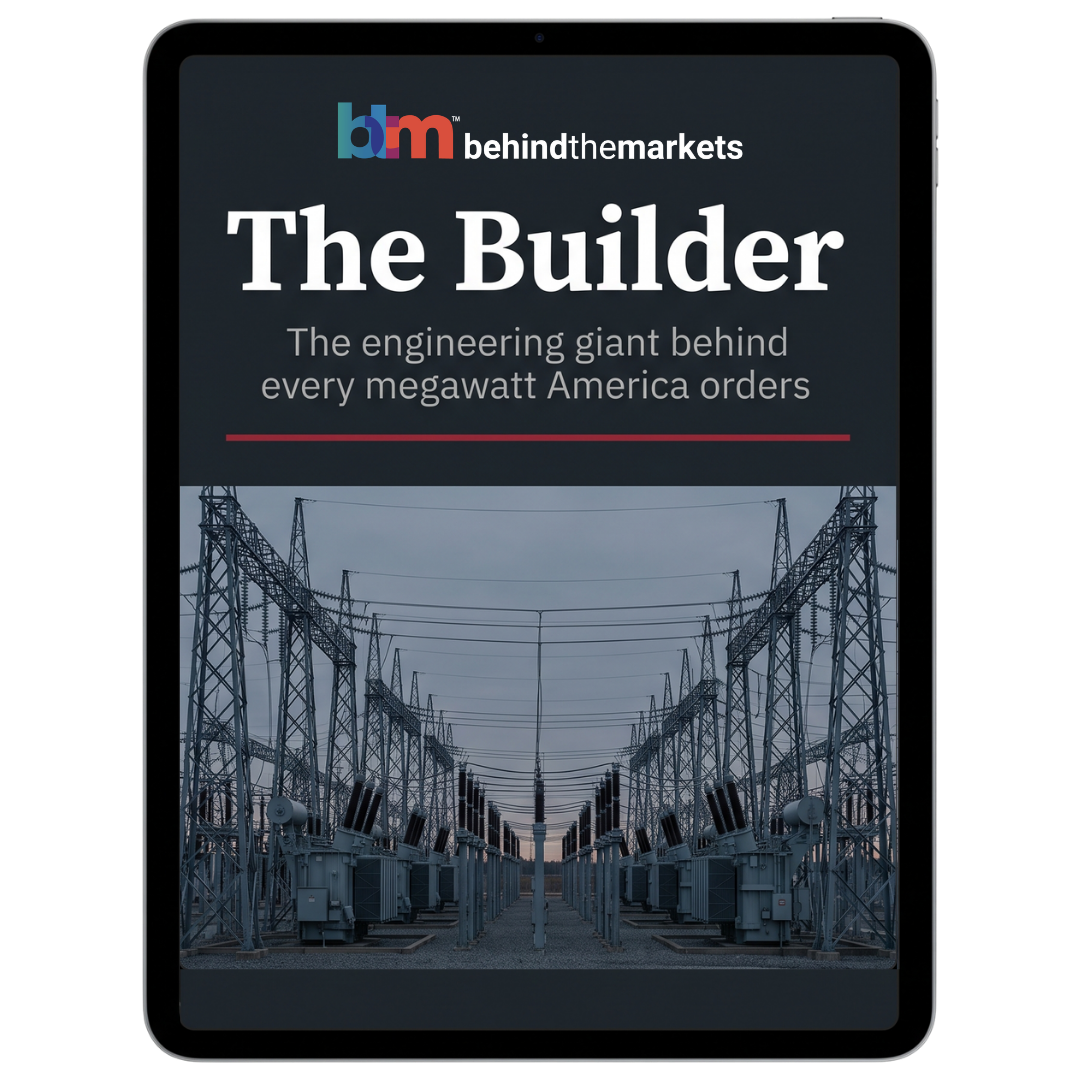
Bonus Briefing #3 — The Builder
Every megawatt I've described tonight has to be poured, welded, and wired by somebody.
The reactors. The substations.
The data centers the size of small towns.
There is one American engineering giant whose name shows up on those blueprints again and again. When Washington orders a buildout, this is who picks up the shovel.
The briefing hands you the name, the ticker, and the price I'd pay today.
Plus the five free gifts from tonight.
Palantir, Super Micro, and Apple on the sell side. Baker Hughes and Cloudflare on the buy side.
So let’s add up what this package is valued at…
The Federally Licensed Monopoly is $249.
The 3 chokepoint briefings run $149 apiece.
Silicon Gate, Bottleneck Metal, and Builder.
Twelve monthly issues of Behind the Markets at the retail rate. $399.
The alerts, the public portfolio, the sell discipline. Included.
Add it up and you’re looking at over $1,000 – and that would be reasonable.
But I won’t charge you that.
Your price today: $49.
A one-year subscription to Behind the Markets normally runs $399.
But with the November 4, 2026 announcement on the calendar and the January 1, 2028 deadline written into law, I've authorized a discount that brings your first year down to $49.
That's about 13 cents a day.
The whole year costs less than most families spend on a single tank of gas.
And it's the same price whether you're investing $500 or $500,000.
The research doesn't care how big your stake is. And neither do I.
But I want to make this even easier…
Which is why I’m offering our 6-Month Cash Back Guarantee.
Take the next 180 days to try-out Behind the Markets.
Read every current issue… every back issue…
Read the reports you’re going to receive today…
Get a real feel for my work in action.
And if you’re not 100% thrilled with our work here after 6 months…
If you don’t think this is the best return you’ve ever received on $49…
Call my team up and let us know. If we can’t make it right, we’ll happily refund your $49.

But I don’t think that’ll happen.
Especially when I’m receiving letters like this from readers almost daily…
"Dylan: You are the best & most accurate investing advisor I have ever used! I find you to be an honest, kind, & trustworthy adviser & far above all other services in integrity." — Rod G., Reno, Nevada
"I have only been a client of Dylan's BTM Investment service for a short time and already up 50% on the actions we have taken." — Dennis W., Ann Arbor, Michigan
"Your customer service rocks. Other services take weeks or even months to respond but you respond in literally 5 minutes!!! You're AMAZING!!!" — Mike M., Fishers, Indiana
My goal is for you to stay with us for years to come.
But you have a decision to make – right here.
Because there are two clocks you’re racing against.
The near clock is this company's next quarterly announcement, expected November 4, 2026.
That's the next public chance for someone to read, a live call, the data and calculations I’ve shown you today.
The far clock is January 1, 2028. Written into federal law, tightening by itself every day you wait.
And underneath both sits the one deadline nobody schedules.
This is not a mega-cap.
When the stock runs past our buy-up-to price, I mark it in the portfolio and tell new readers to stand down until it comes back.
Earlier is simply better.
Two Investors, Twenty-Four Months
Picture two investors tomorrow morning.
The first one closes the tab.
He keeps the portfolio he has.
The beloved names. The Palantir, the Super Micro, the Apple.
The toll-payers, priced as if the physical world will simply cooperate.
Maybe he's fine.
But every month the queue gets longer. The wait times stretch.
The clock in the law ticks.
And he stands on the paying side of all of it, holding a story the market finished pricing two years ago.
The second one spends the price of a family pizza night, and one evening.
He reads the name in the briefing.
Then he makes one decision.
Stop betting on the traffic. Start owning the road.
Not a prediction. A position.
In the only licensed company of its kind in America, with an act of Congress behind the moat and a deadline written into law.
Twenty-four months from now, those two investors won't be having the same conversation about this era.
You get to choose which one you are.
And November 4th is as good a deadline as you will ever be handed for a decision like this one.
The clock doesn't care what Wall Street believes. Congress already set it.
The only question left is whether you own the company when it strikes.
Whatever you decide tonight, go check the record first.
It's why we publish it.
Sincerely,

Founder & CEO, Behind the Markets